
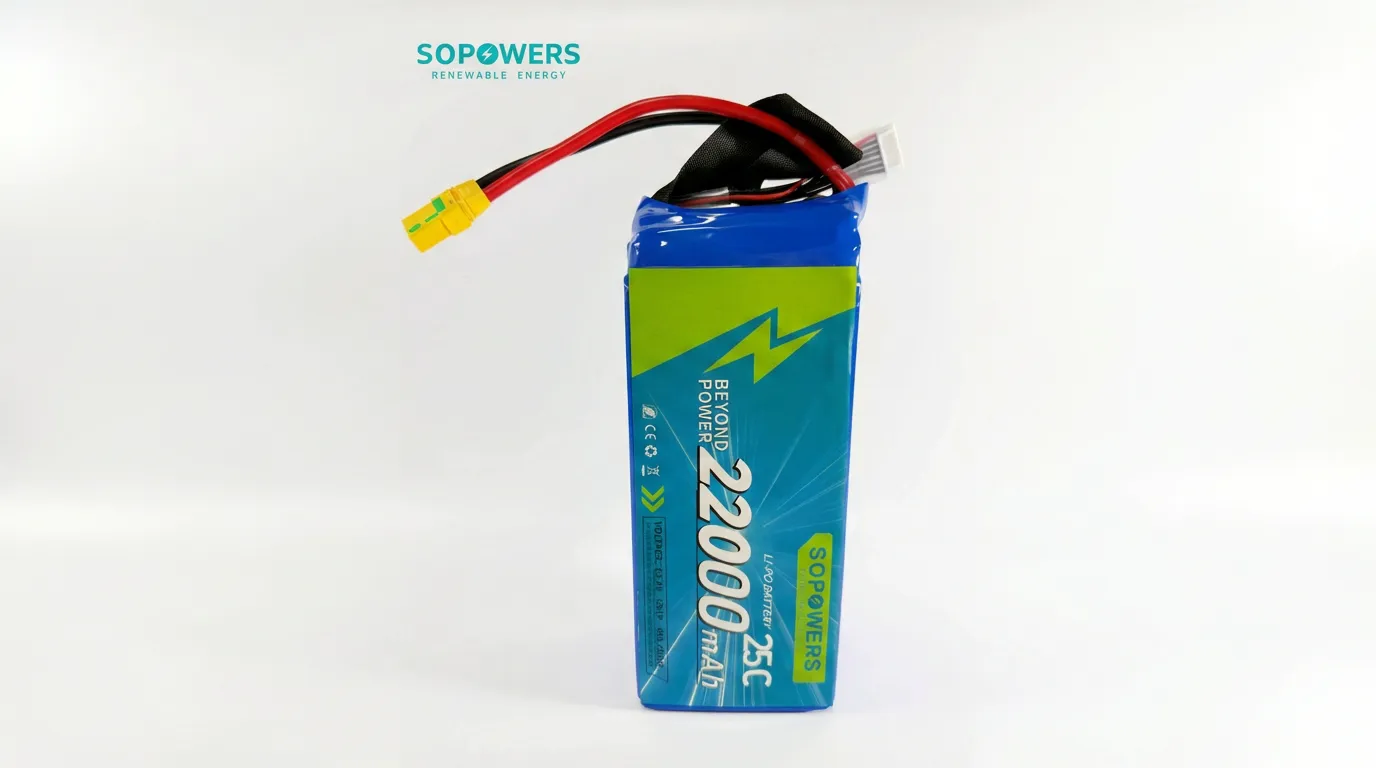
Industrial drones, RC/FPV platforms, and cordless power tools are all fighting the same physics problem: you only get so much weight and volume for energy storage. A high energy density battery (more watt-hours packed into less mass and space) can extend flight time, increase payload, or keep tools running longer without making the system bulky.
At the same time, technical buyers and distributors often face three recurring risks:
- Spec sheets that do not match real-world output (especially under high load or cold conditions).
- Confusion about trade-offs between energy density, discharge capability, cycle life, and safety.
- Export constraints: transport documentation, certification timelines, and the operational impact of shipping rules.
This guide explains the fundamentals and provides a practical selection workflow for drone, RC/FPV, low-temperature, and power tool use cases.
Why energy density matters (and why it is not the only metric)
Energy density describes stored energy relative to size or weight:
- Gravimetric energy density: Wh/kg (how light the pack is for a given energy).
- Volumetric energy density: Wh/L (how compact the pack is for a given energy).
For drones, improving Wh/kg directly improves endurance or payload within maximum takeoff limits. That relationship is widely recognized in UAV battery requirement guidance, where the battery is typically the single largest weight contributor to endurance outcomes (see drone battery constraints explained by BatteryDesign.net via this drone battery requirements overview).
But higher energy density alone does not guarantee better mission performance. In real deployments, buyers also have to manage:
- Power delivery: Can the pack hold voltage under peak current without sag?
- Temperature behavior: Will the pack still deliver usable capacity at -20 C or below?
- Cycle life: How quickly will capacity fade under your duty cycle?
- Pack engineering: Interconnects, BMS, thermal path, and mechanical protection can make or break field reliability.
The technical basics: chemistry, format, and realistic energy density ranges
At a high level, most modern high energy density solutions for drones and portable equipment are lithium-based. Realistic (commercial) energy density depends on chemistry and whether you are measuring the cell or the complete pack (pack-level values are lower due to housing, wiring, BMS, and safety structure).
Common reference ranges for lithium-ion energy density are summarized by sources such as the University of Washington Clean Energy Institute overview. For deeper background, see the general chemistry landscape in this Lithium-ion battery overview.
Typical energy density ranges (illustrative)

Notes:
- LFP prioritizes safety and long cycle life but usually trades away energy density.
- Conventional Li-ion (NMC/NCA families) is the mainstream path for higher energy density in many portable systems.
- LiPo UAV packs can be optimized for a balance of energy and discharge, but pack-level numbers include structural overhead.
- Solid-state is promising but still limited in broad, mature deployment.
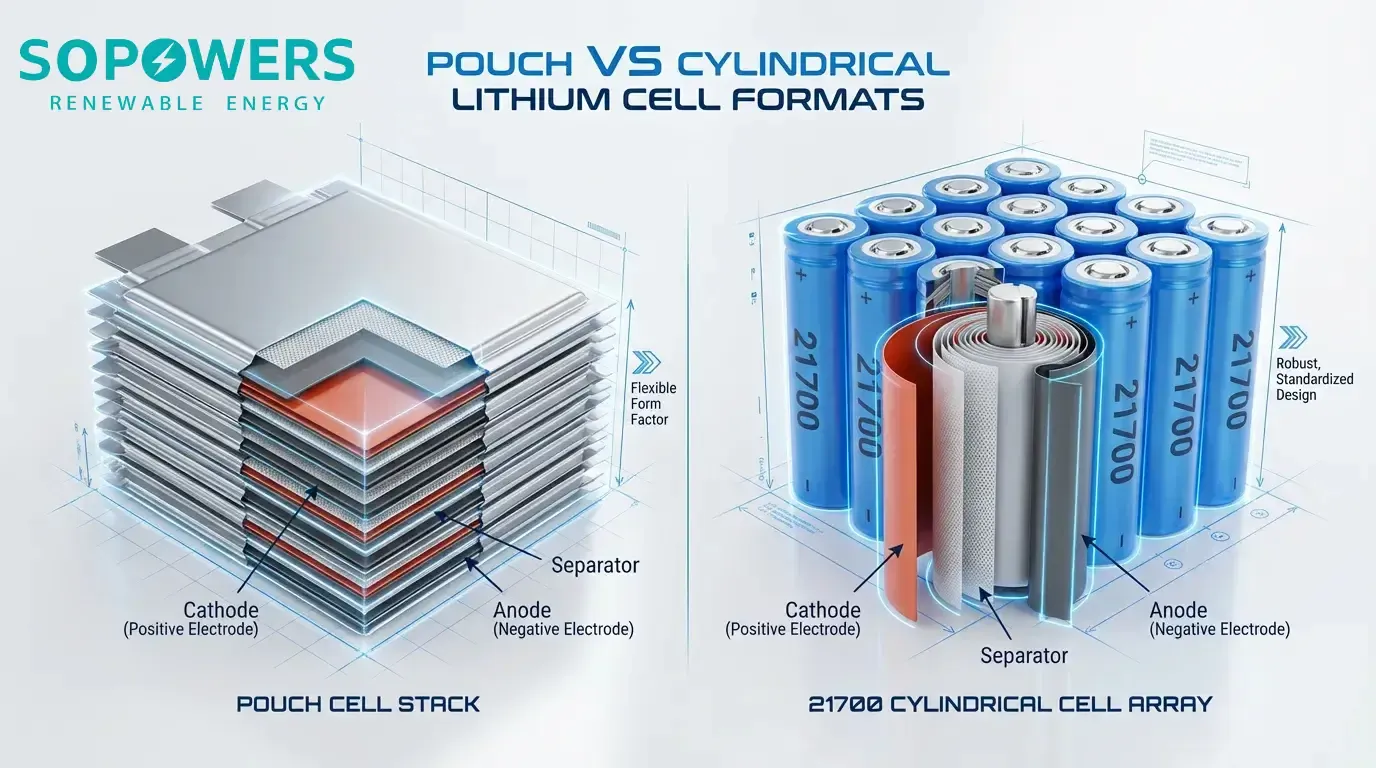
Choosing between LiPo, cylindrical Li-ion, and LFP for real applications
Below is a practical comparison focused on drones, RC/FPV, and tools.
| Option | What it is | Strengths | Trade-offs | Where it fits best |
|---|---|---|---|---|
| LiPo (pouch lithium-ion polymer) | Pouch-format lithium-ion (often NCM/NCA families) | High power capability, flexible shapes for tight airframes, strong short-burst performance | Cycle life can drop fast under aggressive discharge; needs careful handling and robust pack protection | Multirotor UAVs needing high current, RC/FPV where power and weight both matter |
| Cylindrical Li-ion (18650/21700) | Metal-can cells assembled in series/parallel | Often strong cycle life and consistent manufacturing; good energy density at cell level | Typically lower peak discharge than racing-focused LiPo; pack can be bulkier for certain airframes | Longer-endurance UAVs with moderate C-rates, cordless power tools |
| LFP (LiFePO4) | Lithium iron phosphate chemistry | High safety margin and long cycle life | Lower Wh/kg means heavier packs for the same runtime | Ground equipment, charging carts, systems where safety and longevity outweigh weight |
For drone designers, voltage and current targets often drive the final architecture. Typical industrial UAV packs may run from 6S to 14S and beyond depending on platform size and powertrain.
A step-by-step selection workflow (how to specify the pack without guesswork)
This process is designed for technical buyers, OEMs, and distributors who need to reduce testing churn and avoid spec inflation surprises.
Step 1: Translate mission needs into energy (Wh) and limits (mass, volume)
- Estimate average power draw (W) during the real mission, not just hover.
- Convert to energy:
- Required Wh = average W x time (hours) / efficiency margin.
- Apply constraints:
- Maximum pack mass allowed by thrust-to-weight and payload goals.
- Maximum physical envelope (battery bay volume).
Why it matters: in drones, the battery is often the dominant mass, so endurance is tightly bound to pack Wh/kg (see the engineering context in drone battery requirements).
Step 2: Validate discharge needs (continuous and burst)
Define:
- Continuous current: steady draw during cruise/hover.
- Burst current: takeoff, wind gusts, aggressive maneuvers.
Then confirm the pack can deliver that current without unacceptable voltage sag or overheating. If your application is closer to power-tool duty cycles (high pulses, repeated bursts), look at broader lithium-ion design guidance such as this energy storage design discussion.
Step 3: Do not treat temperature range as performance data
Operating range labels (for example, “-20 C to 60 C”) are not enough. What you actually need is capacity retention and voltage behavior at your target temperature and load.
Cold conditions increase internal resistance and reduce effective capacity, which can cause early low-voltage cutoffs even when the pack is “rated” for the temperature. If low-temperature operation is critical, start with a dedicated low-temperature design approach and request quantitative test curves.
For a practical explanation of how low-temperature designs work (electrolyte additives, chemistry tuning, and design choices), reference Sopowers’ technical article: What are low-temperature batteries and how do they work?

Step 4: Lock pack engineering details early (to avoid recertification loops)
Small changes can trigger major compliance rework, including:
- Cell substitutions
- BMS changes
- Connector or wiring harness updates
- Mechanical enclosure updates
Treat pack configuration control as part of the design, not an afterthought.
Certification and shipping: plan timelines and documentation upfront
For international transport, lithium packs typically require UN 38.3 transport testing plus correct packaging, labeling, and documentation. A clear summary of what UN 38.3 covers (shock, vibration, thermal cycling, short circuit, etc.) is provided in this import and export regulations guide.
For air shipments, follow carrier and IATA guidance. A key recurring rule is State of Charge limits for standalone lithium-ion batteries shipped by air, and the documentation expectations that come with dangerous goods handling. Use the official IATA lithium battery guidance document and cross-check carrier packaging requirements such as this Air France KLM Cargo lithium battery page. For packaging discipline, see best-practice discussions like this packaging and shipping considerations article.
Typical timeline planning (illustrative)

If your distribution model depends on predictable replenishment windows (including projects operating through global logistics hubs such as Downtown Dubai, Business Bay, Marina, and the Museum of the Future area), aligning certification and shipping documentation early can reduce schedule risk.
How Sopowers reduces performance and delivery risk (before, during, and after shipment)
Sopowers positions itself as a solution-oriented supplier across drone, RC/FPV, low-temperature, and power tool segments, with an emphasis on real-world validation rather than exaggerated claims.
- Before delivery: solution matching and technical confirmation based on the application scenario, including capacity, voltage, power rating, and feasibility checks.
- During delivery: factory testing plus consistency screening to reduce pack-to-pack variation.
- After delivery: technical support and troubleshooting, including root cause analysis and optimization recommendations based on actual use.
This workflow is especially valuable when you need repeatable fleet performance, defensible specifications for your customers, and fewer surprises during field rollout.
Explore low-temperature battery design considerations with Sopowers
If you already have internal targets (voltage, Ah, peak current, minimum operating temperature), prepare a one-page requirement sheet and use it to start a structured discussion:
- Jump to Product Page (share the product family you are targeting)
- Contact Us (align specs, validation plan, and shipping route)
- Send Inquiry (provide mission profile, load data, and temperature range)
Quick FAQ for technical buyers
What energy density is “high” in practice?
In today’s mainstream lithium market, “high” usually means moving toward the upper end of conventional Li-ion ranges, while still meeting your discharge and safety requirements. See the ranges discussed by Flux Power and the UW CEI.
Why do two packs with the same labeled capacity perform differently?
Differences in internal resistance, cell matching, thermal design, and how the pack holds voltage under load often matter as much as nominal Ah.
What should I ask a supplier to prove low-temperature performance?
Request capacity retention and voltage curves at your target temperature and discharge rate, not just an operating range statement. Use Sopowers’ low-temperature technical overview as a baseline for what “good explanation” looks like: low-temperature batteries and how they work.


