
Shenzhen Sets the Pace for Modern Drone Shows
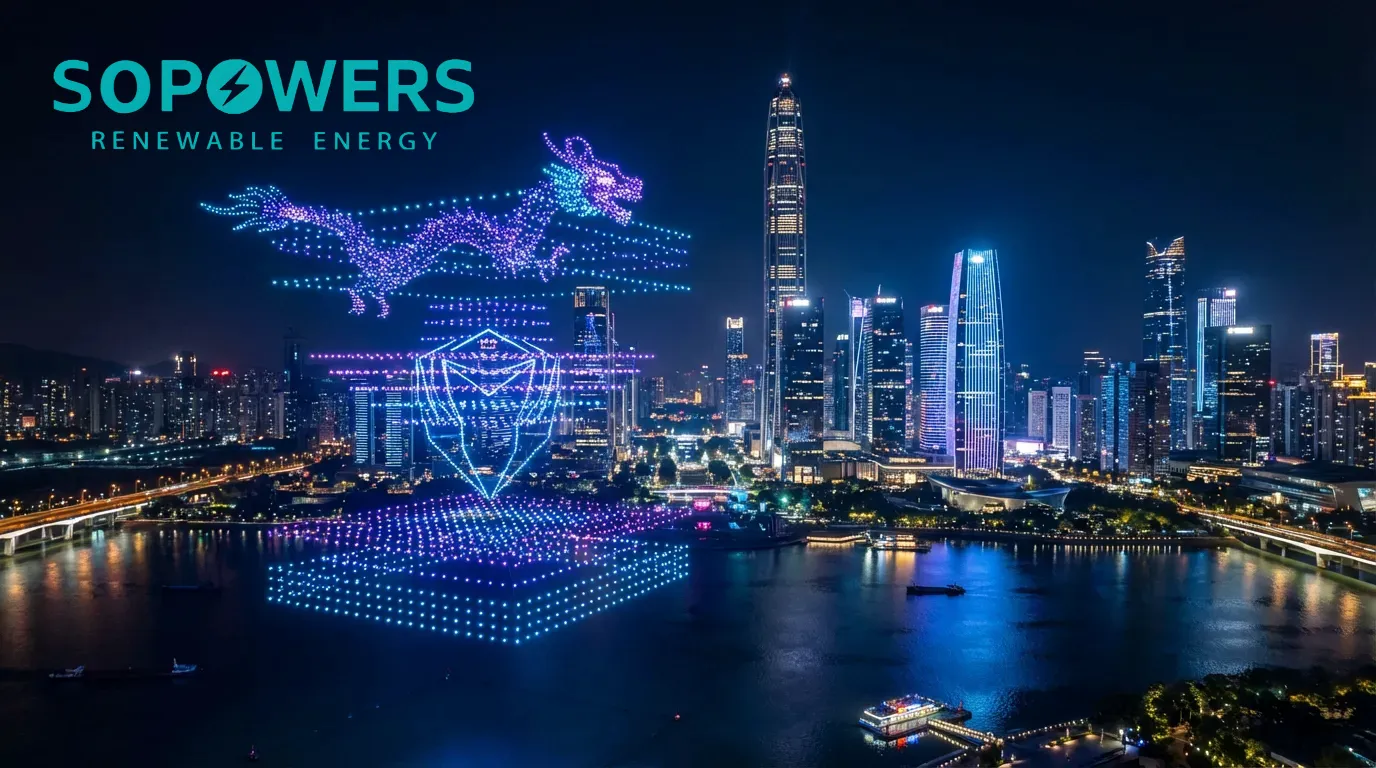
China has become the global reference point for the China drone light show industry, and Shenzhen is at the center of that momentum. The city combines a dense UAV supply chain, advanced electronics manufacturing, strong R&D investment, and real-world experience delivering record-breaking aerial performances. Recent Guinness-recognized shows involving more than 10,000 drones have reinforced Shenzhen’s role as both a technology hub and a public stage for large-scale aerial storytelling.
For buyers, integrators, and battery distributors, that matters for one reason: a drone light show is not only about animation software or synchronized flight paths. It is also a power-system challenge. Flight time, voltage stability, pack consistency, charging turnaround, and low-temperature reliability all affect whether a show looks seamless in the sky or starts dropping drones out of formation.
This is where Shenzhen’s broader ecosystem becomes important. Alongside swarm-control innovation, the city also supports battery development for UAv applications. As a Shenzhen-based battery manufacturer, Sopowers’ UAV solutions fit naturally into this ecosystem by focusing on verified performance, application matching, and stable batch consistency rather than exaggerated claims.
Why Shenzhen Leads the World in Aerial Drone Performance Technology
Several factors explain why Shenzhen is widely associated with the most advanced aerial drone light show projects.
Industrial concentration
Shenzhen is home to one of the world’s strongest drone and electronics supply chains. The city has deep capabilities in flight control, RF communication, battery manufacturing, embedded systems, and precision assembly. That shortens development cycles and makes it easier to test, refine, and scale performance hardware.
Record-setting show experience
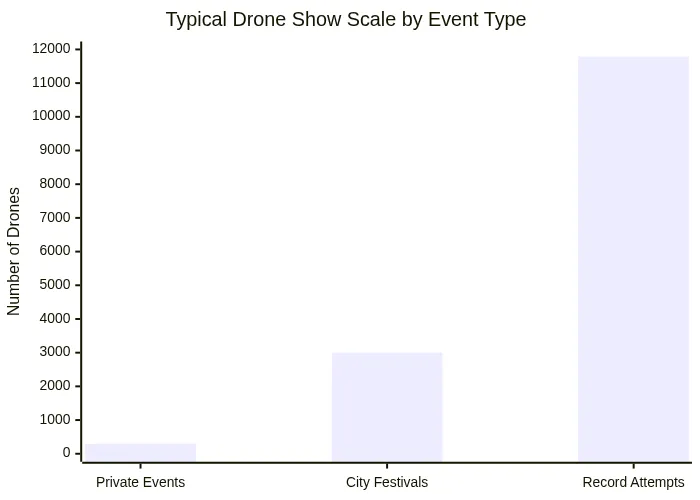
Shenzhen-based providers such as DAMODA have demonstrated what mature drone swarm show China operations look like in practice. Guinness coverage of 7,598-drone and 10,200-drone displays, as well as later 11,787-drone records in Chongqing, shows how far fleet coordination has advanced in China. These are not small demonstrations. They are full-scale deployments requiring automated launch management, precise positioning, and strict battery screening.
Low-altitude economy infrastructure
Shenzhen’s broader investment in low-altitude operations also helps. The city has expanded takeoff and landing facilities and supports commercial UAV activity across logistics and urban services. That ecosystem improves operational readiness for large public drone events as well.
Why this matters commercially
For event operators and distributors, Shenzhen is not just where shows happen. It is where supporting components are developed, validated, and manufactured. That includes drone show technology on the control side and high-performance battery systems on the power side.
| Shenzhen advantage | Why it matters for show operators |
|---|---|
| UAV manufacturing cluster | Faster sourcing and customization |
| Strong battery supply chain | Better pack matching and scalable production |
| Swarm show track record | Proven capability in large synchronized fleets |
| R&D investment | Faster iteration in control, safety, and deployment systems |
How a Synchronized Drone Light Show Actually Works
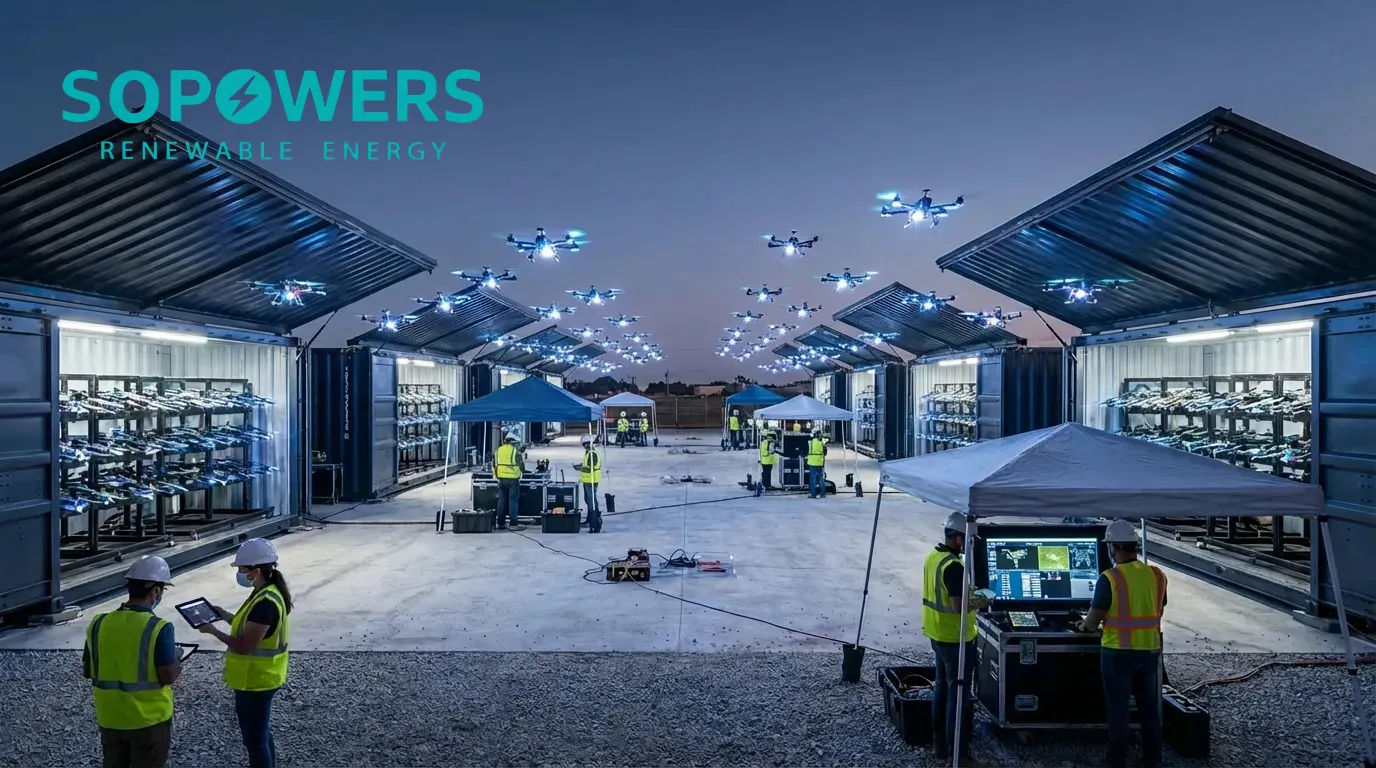
A professional synchronized drone light show is a tightly coordinated system made up of software, communications, navigation, aircraft, and batteries. Each part must perform within narrow tolerances.
Core system layers
- Show design and path planning
The visual sequence is created in animation software, then translated into flight paths and timing instructions for each drone. - Positioning and synchronization
Professional fleets commonly rely on GNSS and RTK correction to achieve highly accurate positioning. This is what allows thousands of drones to maintain recognizable shapes and transitions. - Communications and telemetry
Ground control systems monitor battery status, GPS lock, link quality, and fault conditions in real time. - Launch and recovery logistics
Advanced providers increasingly use containerized systems with auto-deploy, auto-takeoff, and auto-landing workflows. - Battery and charging operations
Every sortie depends on packs that can deliver stable voltage across the entire fleet.

The battery role inside the show system
In a normal public recap, viewers see lights and motion. What they do not see is that batteries determine:
- Flight duration.
- Reserve margin for safe landing.
- Voltage behavior during takeoff and wind correction.
- Whether hundreds of drones remain synchronized for the full performance.
That is why technical buyers often start with the visual side of a drone entertainment technology project, but end up making decisions based on battery architecture, pack chemistry, and consistency control.
For teams evaluating power options, Sopowers also shares application-focused guidance on high-discharge batteries for UAVs and long flight time drone battery selection.
The Hidden Power Requirement Behind Large Scale Drone Shows
In a large scale drone show China project, battery selection is not a secondary detail. It is a design constraint from the beginning.
What the pack must deliver
A show battery typically needs to balance five requirements at once:
- High energy density for 15 to 25 minutes of total mission time.
- Sufficient discharge capability for takeoff, hovering, repositioning, and wind response.
- Tight pack-to-pack consistency across hundreds or thousands of units.
- Reliable low-temperature behavior for outdoor night operations.
- Strong safety margins in dense urban or crowd-adjacent environments.
Chemistry trade-offs
| Chemistry | Typical strength | Typical limitation | Best fit in show ecosystem |
|---|---|---|---|
| LiPo | High discharge and responsive power delivery | Lower cycle life and more sensitivity to abuse | Dynamic show drones and high-power multirotors |
| Li-ion | Higher energy density and longer endurance | Lower C-rate than LiPo | Longer-duration drones and payload-heavy aircraft |
| LiFePO4 | Very high safety and thermal stability | Lower energy density | Ground support equipment and safety-first auxiliary systems |
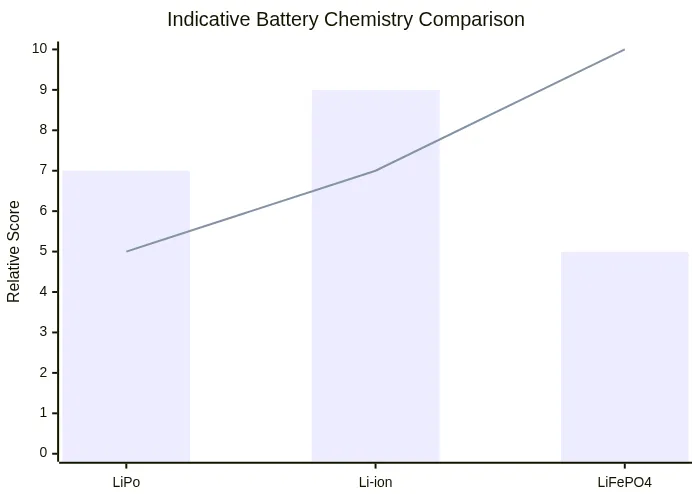
In the chart above, the bars reflect relative energy-density positioning, while the line reflects relative safety positioning based on the ranges referenced in the research report.
Why consistency matters more than headline specs
A single underperforming pack can create visible problems in a swarm. If one segment of the fleet reaches low-voltage protection early, those drones may land sooner, drift out of timing, or be excluded before launch. That is why batch screening matters as much as nominal capacity.
Sopowers addresses this with a process built around real application requirements:
- Before delivery, solution matching and technical confirmation based on the use scenario, including capacity, voltage, power rating, and feasibility.
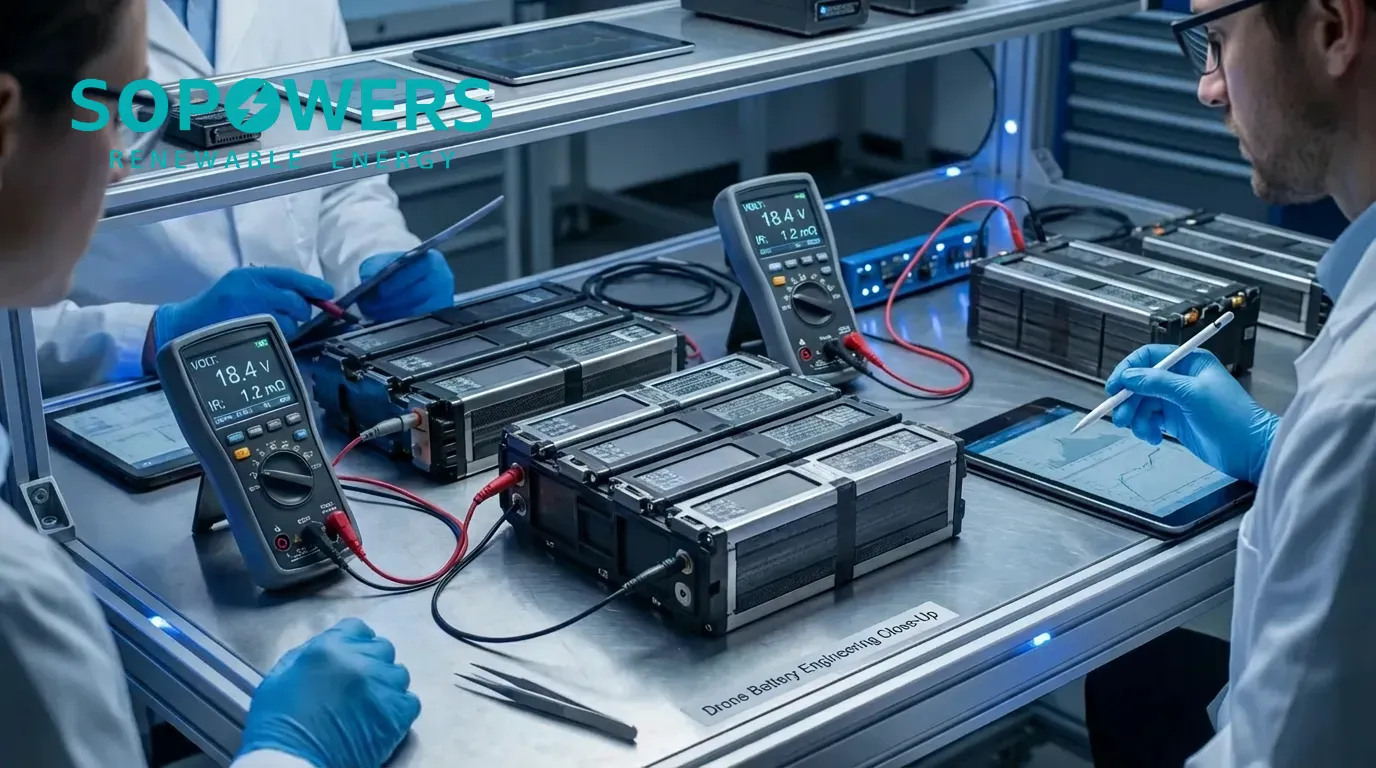
- During delivery, all batteries undergo factory testing and consistency screening.
- After delivery, technical support helps customers analyze field issues and optimize performance.
For buyers comparing products rather than promises, the most useful starting point is the Sopowers product overview and the product page hub.
From Shenzhen to Downtown Dubai: Battery Selection for Real Show Scenarios
The same battery principles that support Shenzhen’s major shows also apply to landmark events in Downtown Dubai, the Museum of the Future, Business Bay, and Marina. These environments raise the bar for reliability because public visibility is high and logistics can be compressed.
Scenario-based power planning
| Scenario | Battery priority | Recommended focus |
|---|---|---|
| Waterfront public show | Stable flight time and wind margin | High energy density with strong batch matching |
| Landmark branding event | Precision and visual continuity | Tight voltage consistency across fleet |
| Cool evening performance | Capacity retention in lower temperatures | Low-temperature validated cells and pre-heating protocol |
| Broadcast or cinematic support drone | Longer endurance with payload | Optimized Li-ion pack architecture |
Example: 12S2P and 12S3P Li-ion solutions for 15-inch drones
Sopowers provides a concrete reference case based on a 15-inch drone platform using SPINR26105 10.9Ah cells, with a 7.5 kg payload and 14 kg total takeoff weight.
| Configuration | Pack weight | Flight time | Compatible Platform | Total Weight | Payload |
|---|---|---|---|---|---|
| 12S2P | 3.59 kg | 19.47 min | 15-inch drone | 15 kg (frame + battery + payload) | 7.5 kg |
| 12S3P | 5.36 kg | 28 min | 15-inch drone | 15 kg (frame + battery + payload) | 7.5 kg |
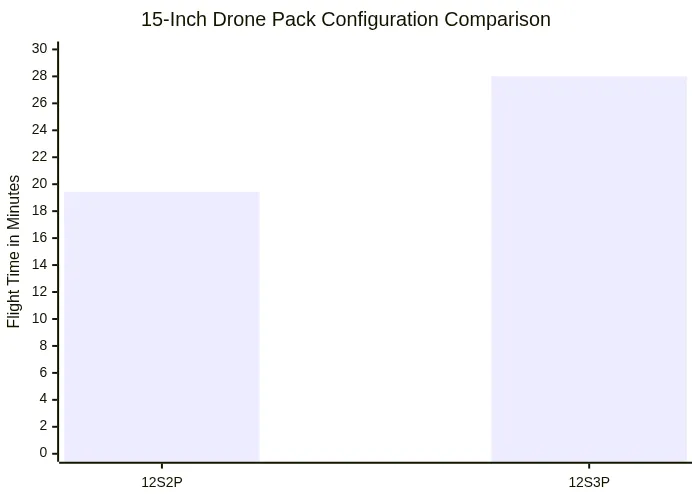
This kind of trade-off is directly relevant to show ecosystems:
- 12S2P supports lighter weight and more agile operation.
- 12S3P supports longer endurance and more operational margin.
For auxiliary event equipment where safety is the primary concern, Sopowers also highlights an AI robot battery pack with 15Ah-15S1P-48V LiFePO4 chemistry, a 5C rate, and a safety profile designed to resist fire or explosion even under severe impact conditions. While this is not a typical flight pack for show drones, it demonstrates Sopowers’ capability in safety-first battery design for event environments and robotic support systems.
Choosing a battery partner, not just a battery vendor
For distributors and integrators, the common pain points are familiar:
- Real-world performance does not match the data sheet.
- Delivery flexibility is limited.
- Certification requirements vary by market and consume time and budget.
Sopowers responds with a solution-oriented model: application matching before production, controlled testing during delivery, and technical troubleshooting after delivery. That is especially relevant for customers serving Europe and America, where documentation, validation, and repeatability matter as much as nominal specifications.
If your project involves UAV packs for entertainment fleets, support drones, FPV filming platforms, or winter-capable applications, relevant resources include FPV battery solutions, low-temperature battery guidance, and the broader RC and application case section.
How to Evaluate the Right Drone Battery for a Show Project
A practical buying checklist helps separate marketable claims from usable engineering data.
Ask these questions first
- What is the required true mission time, including takeoff, performance, landing, and reserve?
- What ambient temperature range will the show face?
- How much voltage sag is acceptable during takeoff and formation changes?
- How tightly are packs matched by internal resistance and capacity?
- What testing data is available for actual UAV load conditions?
- What shipping and certification documents are ready for export?
What strong suppliers should provide
| Evaluation point | What to look for |
|---|---|
| Application matching | Clear recommendation by voltage, capacity, and power rating |
| Batch consistency | IR screening, capacity sorting, and stable production controls |
| Temperature validation | Capacity retention and discharge data under defined conditions |
| Safety and support | Technical troubleshooting after delivery |
| Export readiness | Documentation aligned with UN38.3, IATA, IMDG, and target-market requirements |
For transactional buyers, the goal is simple: reduce project risk. In drone shows, battery quality affects not only runtime but also brand reputation, public safety, and event execution.
A strong supplier should help you define the pack around the use case instead of pushing a generic SKU.
Ready to discuss a drone show battery project or custom UAV pack?
Shenzhen has shown the world what modern aerial art can look like. Behind that visual spectacle is a disciplined technical system, and batteries are one of its most critical foundations. For buyers looking at the China drone light show market from a sourcing, distribution, or integration perspective, the smartest path is to evaluate power systems with the same rigor used to evaluate flight software and swarm control.
Sopowers’ role in that ecosystem is clear: practical battery engineering, transparent validation, and lifecycle support for drone, LiPo, high discharge, low temperature, and high energy density applications.


