
Lithium polymer packs have become the default choice for drones, FPV platforms, and compact high-power tools because they deliver high energy density and very high discharge current in a lightweight pouch format. Those same benefits also create a tighter safety margin: thin pouch construction, flammable electrolyte, and high stored energy make a lipo battery more vulnerable to overheating, mechanical damage, and incorrect charging.
Below is a practical, distributor-friendly tutorial covering receiving, handling, charging, storage, and compliance. It is designed for technical buyers who need repeatable SOPs, fewer incidents, and clearer documentation for export markets.
Why lipo battery safety is a business issue, not just an end-user issue
A lipo battery cell is built as stacked electrode layers inside a sealed aluminum-plastic pouch. The pouch is light, but it is not mechanically rugged like a cylindrical metal can. If a pack is abused electrically or physically, several failure modes can cascade into thermal runaway and fire.
Common triggers you should design SOPs around:
- Over-voltage (overcharge): Charging above the maximum per-cell voltage accelerates gas generation and can create internal shorts.
- Deep discharge: Repeatedly dropping too low can cause irreversible internal damage; the next recharge may become hazardous.
- Over-current (true C-rate mismatch): Excess current produces heat; sustained overheating accelerates swelling and separator damage.
- Mechanical damage: Puncture, bending, or compression can create internal short circuits, sometimes delayed.
- High temperature storage or use: Heat speeds chemical side reactions and increases swelling risk.
- Low temperature operation: Internal resistance rises sharply; users may push harder to compensate, increasing current and heat. Charging below 0 C can increase lithium plating risk (see data and guidance summarized by Battery University BU-808).
For distributors and OEM buyers, safety starts upstream:
- Correct pack selection based on real load profiles (not marketing claims).
- Batch consistency screening (to avoid a single weak cell dictating pack safety).
- Documentation aligned with transport rules and test standards (UN38.3 and applicable IEC/UL).
Electrical and thermal limits you should standardize (with quick-reference table)
Most day-to-day incidents trace back to a few avoidable limit violations. Standardize these limits in training, labeling, and customer-facing manuals.
Key practical thresholds (typical for standard LiPo chemistries used in drones and tools):
| Parameter | Conservative SOP Target | What to avoid | Why it matters |
|---|---|---|---|
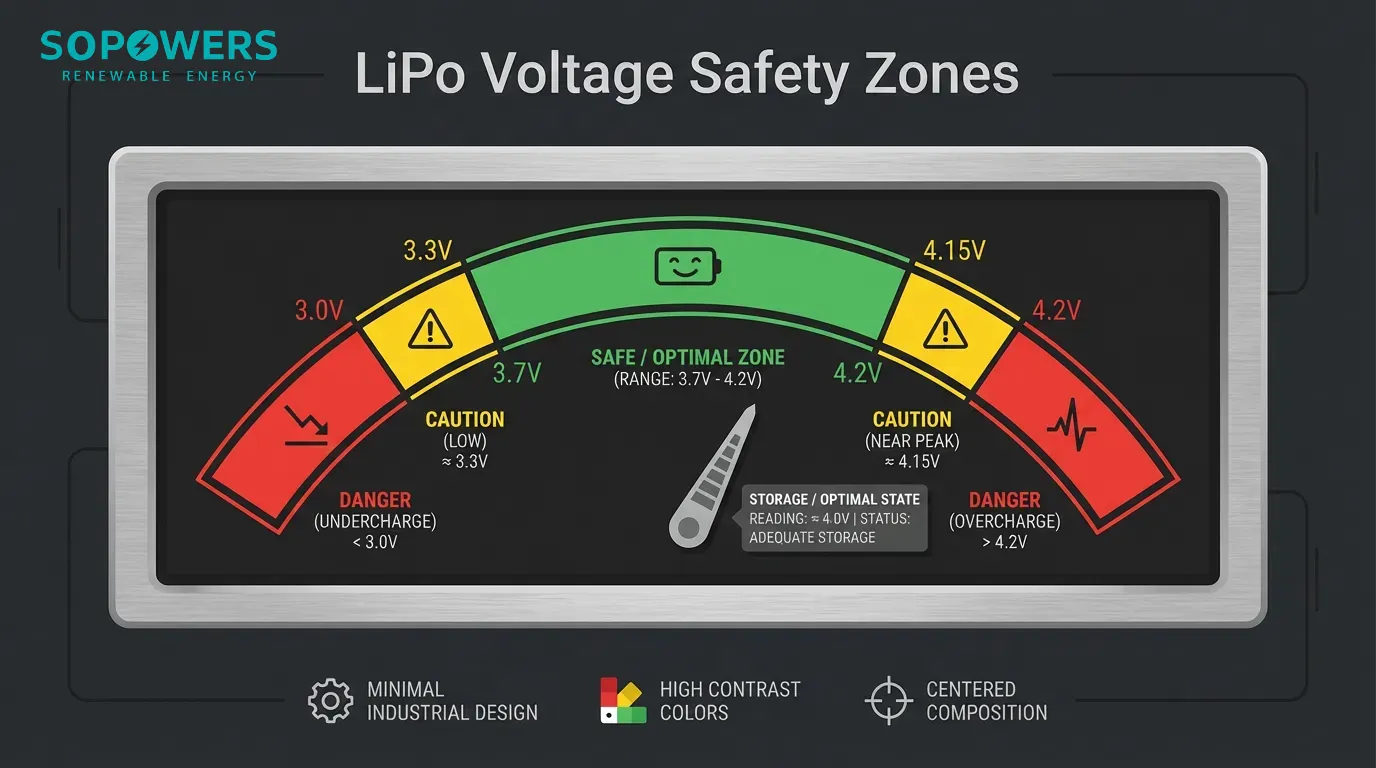
| Max charge voltage (standard LiPo) | 4.20 V per cell | Charging beyond 4.20 V/cell | Over-voltage increases gas generation and internal short risk |
| Min voltage in operation (under load) | Land/stop around 3.5 V/cell | “Running to zero” | Reduces deep-discharge damage; FPV guidance commonly recommends this buffer |
| Absolute low voltage (resting) | Keep above 3.0 V/cell | Storing or leaving below 3.0 V/cell | Deep discharge can lead to internal copper dissolution and future shorts |
| Typical charge rate | 1C | Fast charging unless validated | 1C is widely recommended to balance safety and life |
| Charge temperature | Keep cells warm and stable | Charging below 0 C | Cold charging increases internal damage risk (see Battery University BU-808) |
| Handling temperature | Cool before recharge | Recharging while hot | Heat + high state-of-charge increases risk and accelerates aging |
Two notes that reduce problems in the field:
- LiPo vs LiHV: LiHV cells may allow higher max voltage (often 4.35 V/cell), but only charge to that if the pack is explicitly labeled and specified for HV mode.
- C-rating realism: Printed C-ratings vary widely in truthfulness across the market. A safer procurement approach is to validate performance using temperature rise and voltage sag under the real duty cycle, then derate.
Receiving and handling SOP: inspection, quarantine, and installation
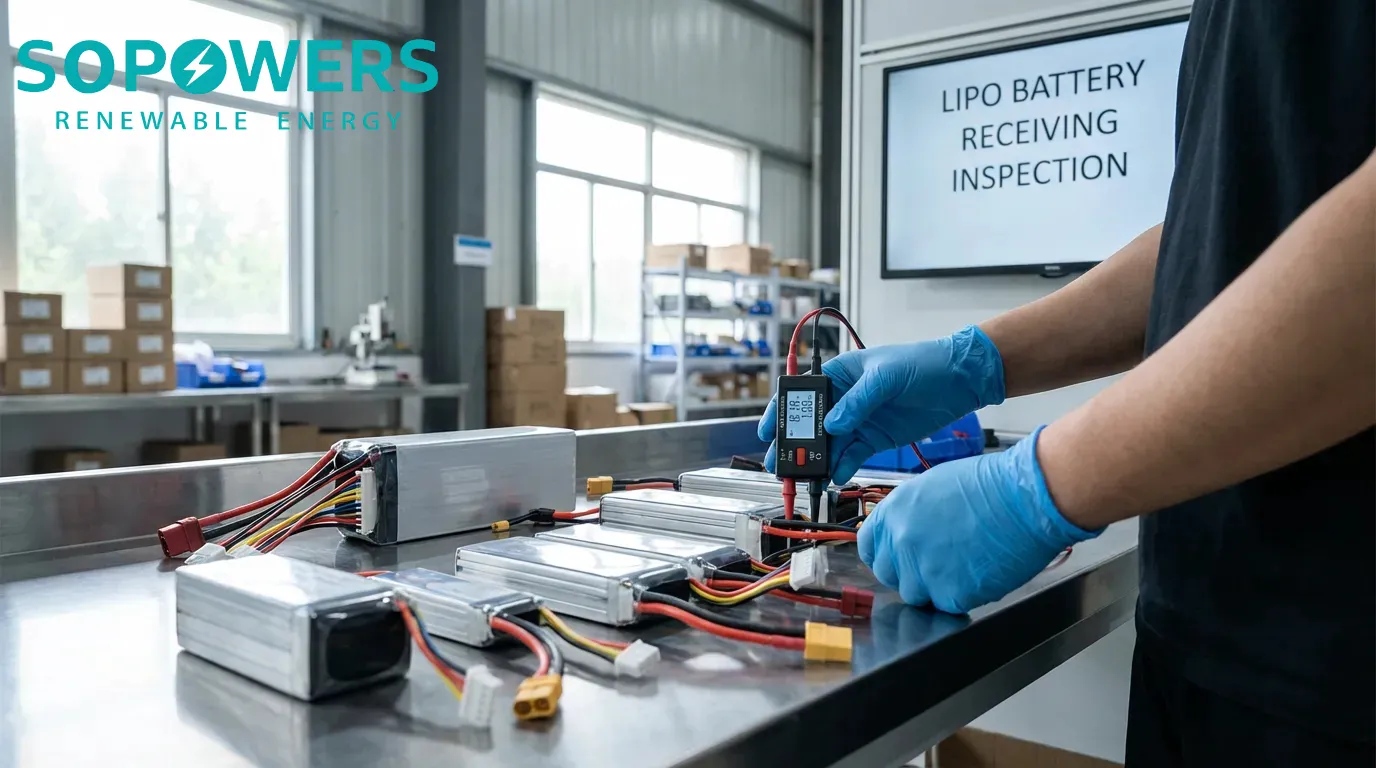
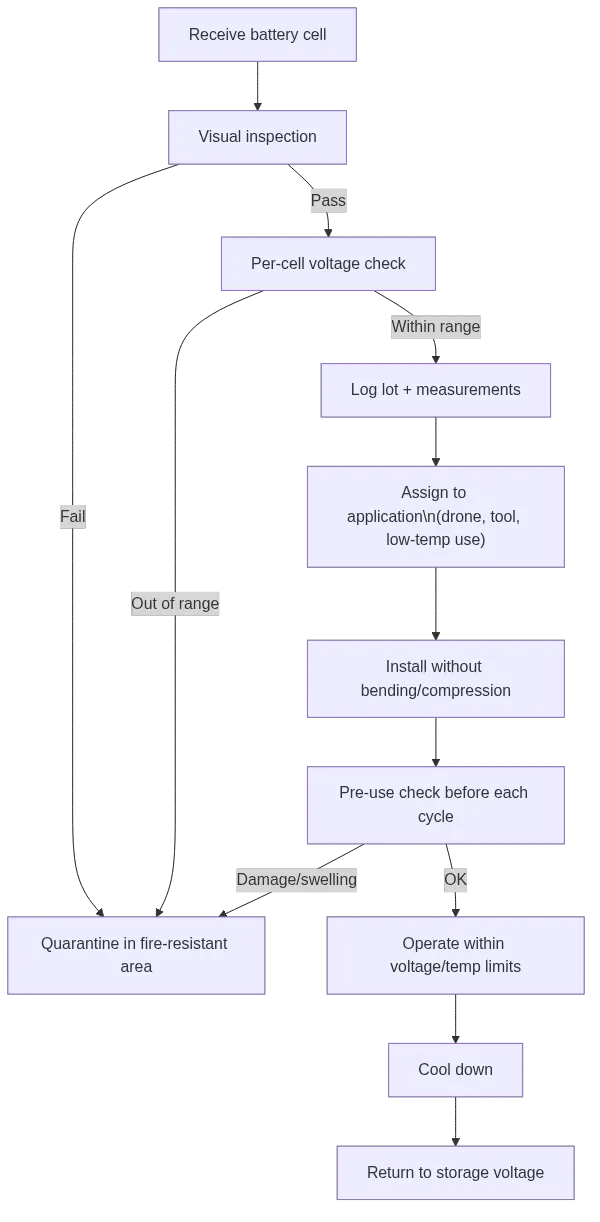
Incoming inspection is where distributors can prevent most downstream safety claims. On receipt, standardize these steps:
1) Visual inspection (100 percent of packs)
- No swelling, creases, dents, punctures, or delamination.
- No cut shrink wrap, exposed foil, or electrolyte odor.
- Connectors and balance leads intact, no exposed copper, good strain relief.
2) Voltage and balance check
- Verify total pack voltage and per-cell voltages with a checker.
- New shipments are commonly delivered near storage voltage (about 3.7 to 3.85 V/cell).
- Quarantine packs if:
- Any cell is out of a reasonable receiving window (for example, below 3.5 V or above 3.95 V per cell on arrival).
- Cell-to-cell imbalance is unusually high for new packs (for example, greater than 0.05 to 0.10 V).
3) Mechanical fit rules (drones and tools)
- Never force a pack into a bay or compress it to close a hatch.
- Protect from vibration with soft padding, but avoid over-tight straps that dent the pouch.
- Keep clear of sharp edges, screw heads, carbon edges, and metal burrs.
4) Log the data
Track lot numbers, received voltages, and any anomalies. This makes root-cause analysis possible later and reduces “he said, she said” quality disputes.
A simple distributor-ready workflow:
Where Sopowers typically adds value in this chain (especially for private-label distributors):
- Before delivery: solution matching and technical confirmation based on the real scenario (capacity, voltage, power rating, and feasibility).
- During delivery: factory testing and consistency screening to reduce weak-cell outliers in series packs.
- After delivery: technical support and troubleshooting to identify whether issues stem from integration settings, misuse, or pack selection.
Charging and discharging tutorial: a repeatable, safer routine
Most safe charging guidance converges on the same essentials: balance charge, correct mode, conservative current, and active monitoring.
Step-by-step charging SOP
- Confirm charger settings: chemistry (LiPo vs LiHV) and correct cell count (S).
- Inspect the pack: do not charge if swollen, dented, or damaged.
- Connect main leads and balance leads: balance charging helps prevent cell drift.
- Set charge rate to 1C unless a validated, labeled higher charge rate is required and tested.
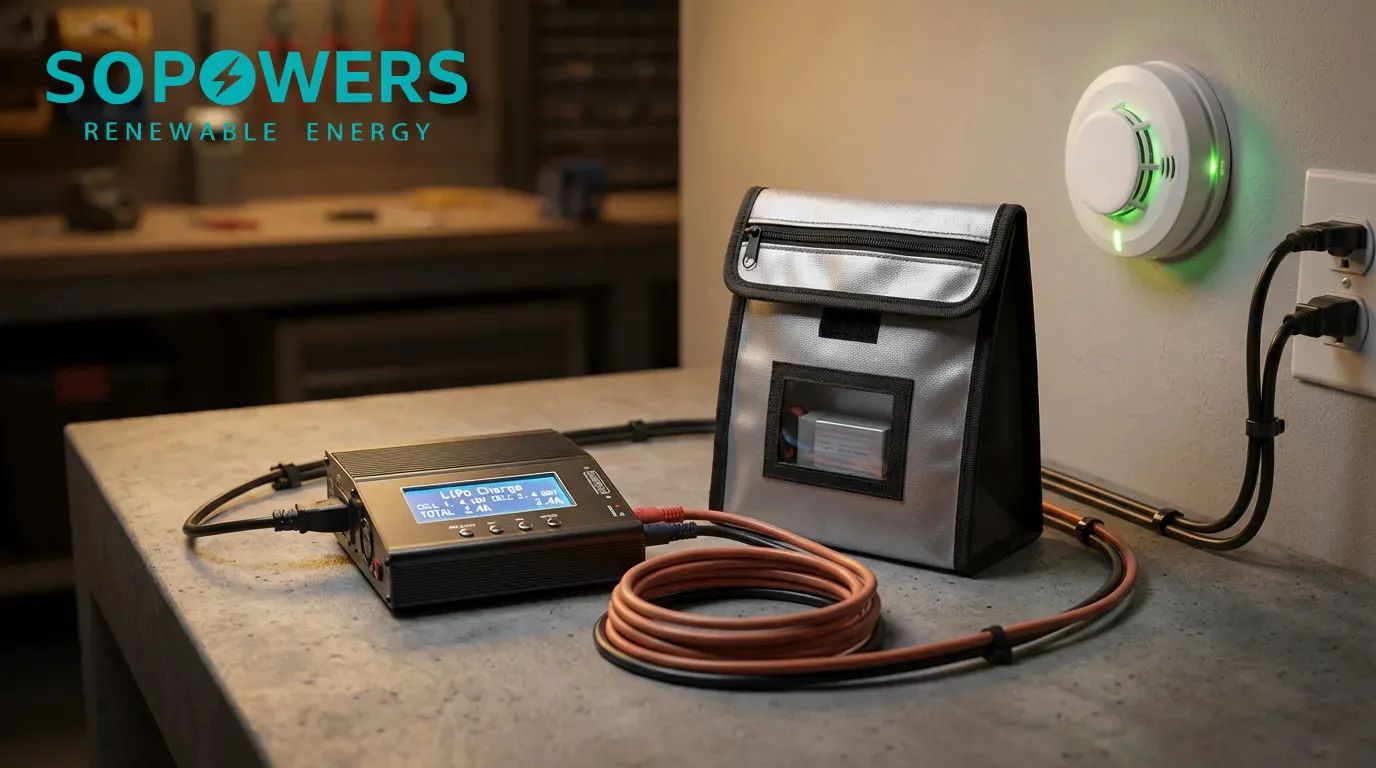
- Use a fire-resistant setup:
- Non-flammable surface (metal, ceramic, concrete).
- LiPo-safe bag or fire-resistant container.
- Monitor for abnormal signs: rapid swelling, hissing, unusual odor, or temperature rise. Stop immediately and move the pack to a safe area if any appear.
- After charging: allow the pack to cool before use or packing for transport.
Discharging and operational cutoffs
- For drones, aim to stop around 3.5 V/cell under load rather than squeezing the last seconds of flight time.
- Set system cutoffs to avoid leaving cells below 3.0 V/cell at rest.
- If packs routinely come down hot to the touch, treat it as a sizing problem: increase capacity (more Ah), reduce peak draw, or use a genuinely higher discharge battery solution validated by temperature rise testing.
Storage, transport, and compliance: reducing risk across the supply chain
Storage voltage and temperature (what to standardize)
For most lipo battery inventory and fleet storage, the most widely recommended approach is:
- Store at about 3.7 to 3.85 V per cell (roughly 40 to 60 percent state of charge).
- Keep storage cool and stable (avoid hot vehicles and sun-facing warehouses).
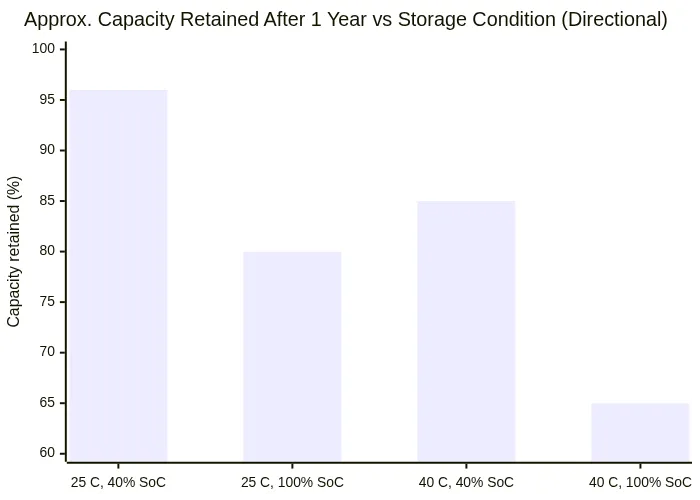
Battery aging data compiled by Battery University BU-808 shows why this matters: high state of charge combined with high temperature dramatically accelerates capacity loss and increases swelling risk.
Transport rules you should align with (air, sea, road)
For export logistics, distributors should ensure suppliers can provide correct classification, packaging, and documents.
Key references to standardize internally:
- UN38.3 transport testing: required before lithium packs can be legally transported (see the UN Manual of Tests and Criteria).
- Air transport constraints: IATA rules and guidance (see the IATA Lithium Battery Guidance Document). For UN 3480 shipments, state of charge limits and packaging rules are especially important.
- SoC limit updates: policy summaries such as Lion Technology’s SoC limit note can help logistics teams track enforcement timing.
- Do not ship damaged or defective packs by air. Build a clear quarantine and disposal route.
Certification expectations (buyers will ask)
Depending on your market and product category, buyers may request:
- IEC safety and performance standards (for example IEC 62133-2, IEC 61960).
- North America oriented standards (for example UL 1642, UL 2054).
- EU directives relevant to the final equipment (for example LVD 2014/35/EU and RoHS 2011/65/EU).
Summary: the safest lipo battery is the one managed by a clear SOP
If you want fewer incidents and fewer warranty disputes, standardize these four rules:
- Inspect and log every pack on arrival (visual + per-cell voltage).
- Charge with a balance charger at conservative rates, in a fire-resistant setup, with monitoring.
- Avoid deep discharge and overheating in real duty cycles (treat repeated hot packs as a sizing issue).
- Store at partial charge (around 3.7 to 3.85 V/cell) in cool, controlled conditions, and align shipments with UN38.3 and IATA requirements.
And you can:


